
Interdependence and the Ideal Human
Blind travelers, sighted travelers, and the gifts we cannot access by ourselves. {Plus NEW episodes on Reimagining the Good Life and two links worth your time}
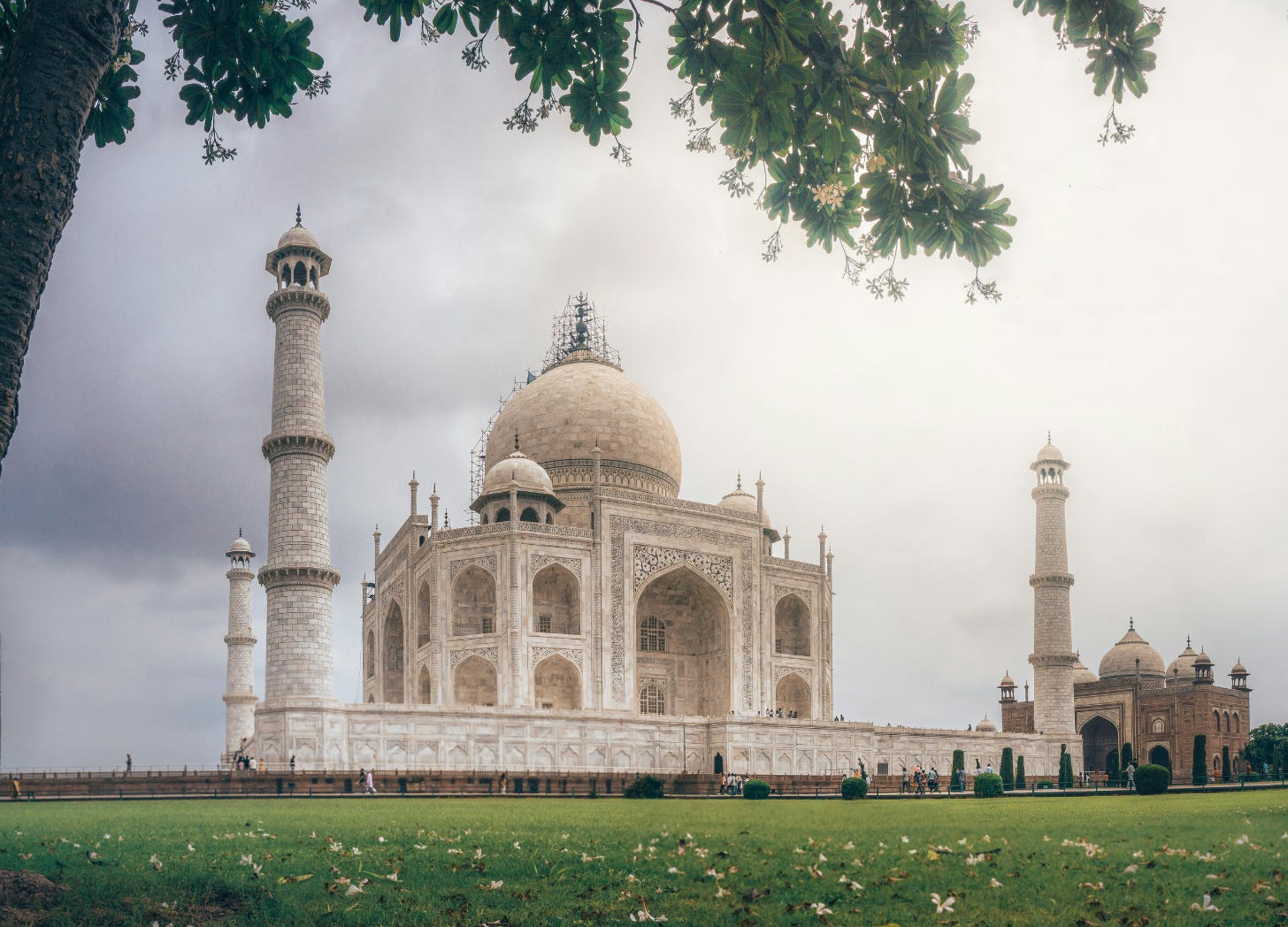
“For blind travelers, it’s like reading a book; for sighted ones, it’s more like watching a film.”
I listened to an episode of The Daily over the weekend where Michael Barbaro interviews Andy Isaacson (who, for the purposes of full disclosure and also incidentally, was my high school classmate). Andy is a journalist who has traveled around the world on assignment for National Geographic, the New York Times, and the like. Most recently, he traveled to India for ten days with Traveleyes, a tourism company that arranges trips for blind and visually impaired travelers alongside sighted ones.
In the essay that accompanied the podcast, Andy writes about the experience of visiting the Taj Mahal. He took it in primarily through his eyes, but his visually impaired companion noticed something he didn’t—the way the architecture brought the hum of people talking into a sort of harmony, with an underlying sound of “Om” resonating within the space.
As Andy writes,
“Sighted people tend to rely on immediate visual cues — architecture, color, landscape — forming quick, vivid impressions, like a movie that lays everything out on the screen. For blind travelers . . . the world reveals itself more slowly, through layers of sound, touch, scent and spatial awareness. It’s a more immersive, interpretive process — like reading a novel, where the story unfolds through detail and imagination.”
Andy’s experience helped me understand how my own ability to see limits my ability to smell and hear and taste and feel. I might even understand my ability in one area as a disability in another. A deficit in one area opens up possibility in another.
Also, Andy received a richer and deeper immersion in the cities and countryside of India because he was asked to pay attention to more than what he could see with his eyes. The women and men with visual impairments contributed to his enriched experience even as they received their own richer understanding through his narration. In other words, neither Andy nor his companions had the ideal body or the ideal experience on their own. It was only by traveling together and relying on one another that the fullness of the place came forth.
I bring all this up because I’ve been thinking a lot about the idea of an ideal human lately. I still default back to a set of modernist assumptions about the ideal human as an individualistic super-human who has unlimited abilities and lives without need. But this story embodied so beautifully a contrasting view of our ideal humanity, humanity as both limited and dependent by design. I am reminded that the only way the ideal human emerges is when we actually rely on one another, with humility about what we have to offer and openness to the gifts others bring into our world.
Blessings,
Amy Julia
P.S. Keep reading for life snapshots and two links that are worth your time.
Reimagining the Good Life podcast
The Spirituality of Weariness with Tish Harrison Warren

Find this episode on:
Apple • Spotify • YouTube
What do you do when you’ve done all the “right” spiritual things and still feel exhausted? Tish Harrison Warren, a writer and Anglican priest, joins me to explore midlife weariness and the practices that help us stay rooted when God feels distant. For those who are tired or wondering why faith feels harder than it used to, here’s hope for the long middle of life from Tish’s latest book, What Grows in Weary Lands.
We’ve all known the long loneliness… and we have found that the solution to it is love… and that love always comes in community.
Maybe where you are is the place to be. Maybe God is right in the midst of not knowing if anything’s happening. Maybe this is where burrow down and go deep into the things of God.
If you continue to reinvent your life over and over again, you actually never mature… you cut off the possibility of going deep.
Upcoming Events
Hope Heals Camp • July 20-24, 2026 {speaker}
Reimagining the Good Life {as Parents} • Nashville • January 14, 2027
Keynote and Lenten Quiet Day • Oklahoma City • March 4-5, 2027
Life Snapshots
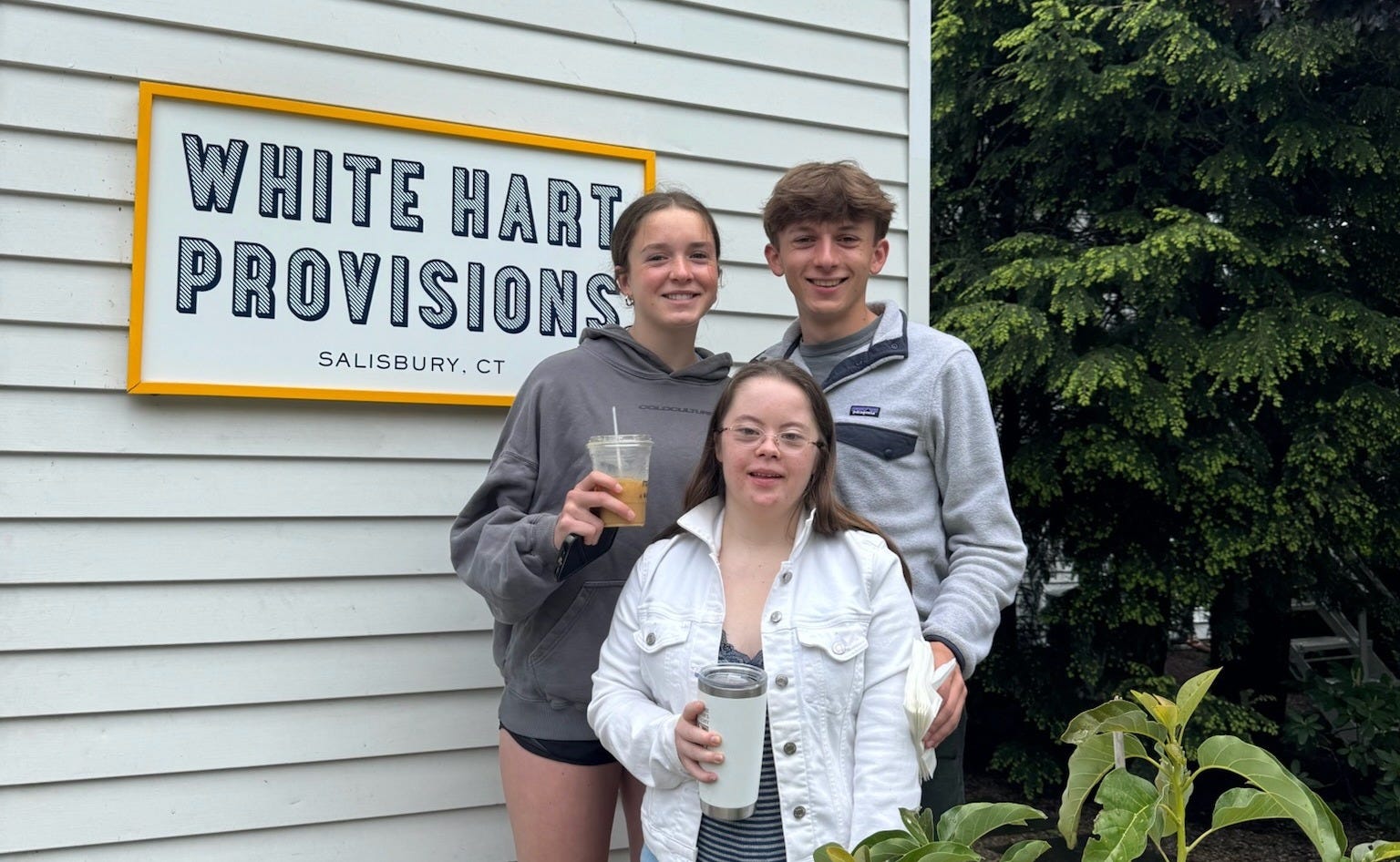
We got one last lunch as a family in the final countdown to William’s graduation. I’m so grateful that even with our kids at boarding school we’ve been able to connect in person almost every single week.
Also, I am 49 years old and still learning all sorts of things about myself, including the fact that I have natural monovision. I just saw the eye doctor for the first time because my primary care doctor insisted I get an eye exam. I learned that one of my eyes sees far away and the other sees closeup. If I close either eye, something becomes blurry, but together they compensate for each other and pretty much allow me to see everything.
2 Links Worth Your Time
Being Human: Dr. Lee Warren on Using Neuroscience and Scripture to Rewire Your Brain
My friend Katherine Wolf says that sometimes she has to “boss her brain around.” I thought of her words when I listened to this fascinating and encouraging conversation between Steve Cuss and neurosurgeon Lee Warren about how we can rewire our own brains through our thinking

Article: ‘12 years comes down to a day’: High schoolers with Down syndrome become some of the first in Kentucky to graduate from integrated program
I love this story about two seniors with Down syndrome graduating from their private Christian high school. According to the article, theirs is “one of the only private schools in the country that allows students with Down syndrome to integrate in classes and activities with their peers.” It is so encouraging to see schools deciding that inclusion is good, right, and beneficial for all.
What are you reading, watching, or listening to these days?
If you know someone rethinking the “good life” and longing for a world where every person is loved, belongs, and matters, please forward this email to them.
🎙Listen to the podcasts.
📰 Miss a week? Read past newsletters here.
As an Amazon Associate, I earn from qualifying purchases.
I resonated with your post! I'm a doctoral student and I am thinking and writing a lot about people with disabilities what it means to be embodied human beings. I was recently diagnosed with ADHD, and have 2 children with ADHD. I am trying to figure out how to live my life with the body and brain that God has given me. I like many others with ADHD struggle to belong in many spaces, including the church, and desire not to be accommodated, but accepted as I am, executive functioning differences and all. Your post reminded me of the beautiful gifts of interdependence and mutual reliance. As someone with ADHD, I am perpetually made to feel like I have to conform to every environment in which I find myself, which just becomes exhausting and isolating. I long for communities of faith in which every kind human being is welcomed and loved as he and she is, without caveat. I long for communities in which compassion, empathy, and love are the values we treasure the most. Thank you for encouraging my heart today!