
When Ordering Pizza Changes the Story
From churches to classrooms, simple acts can reshape communities. {Plus two things I'm pondering connected to Taylor Swift, Bruce Springsteen, and The Pitt.}
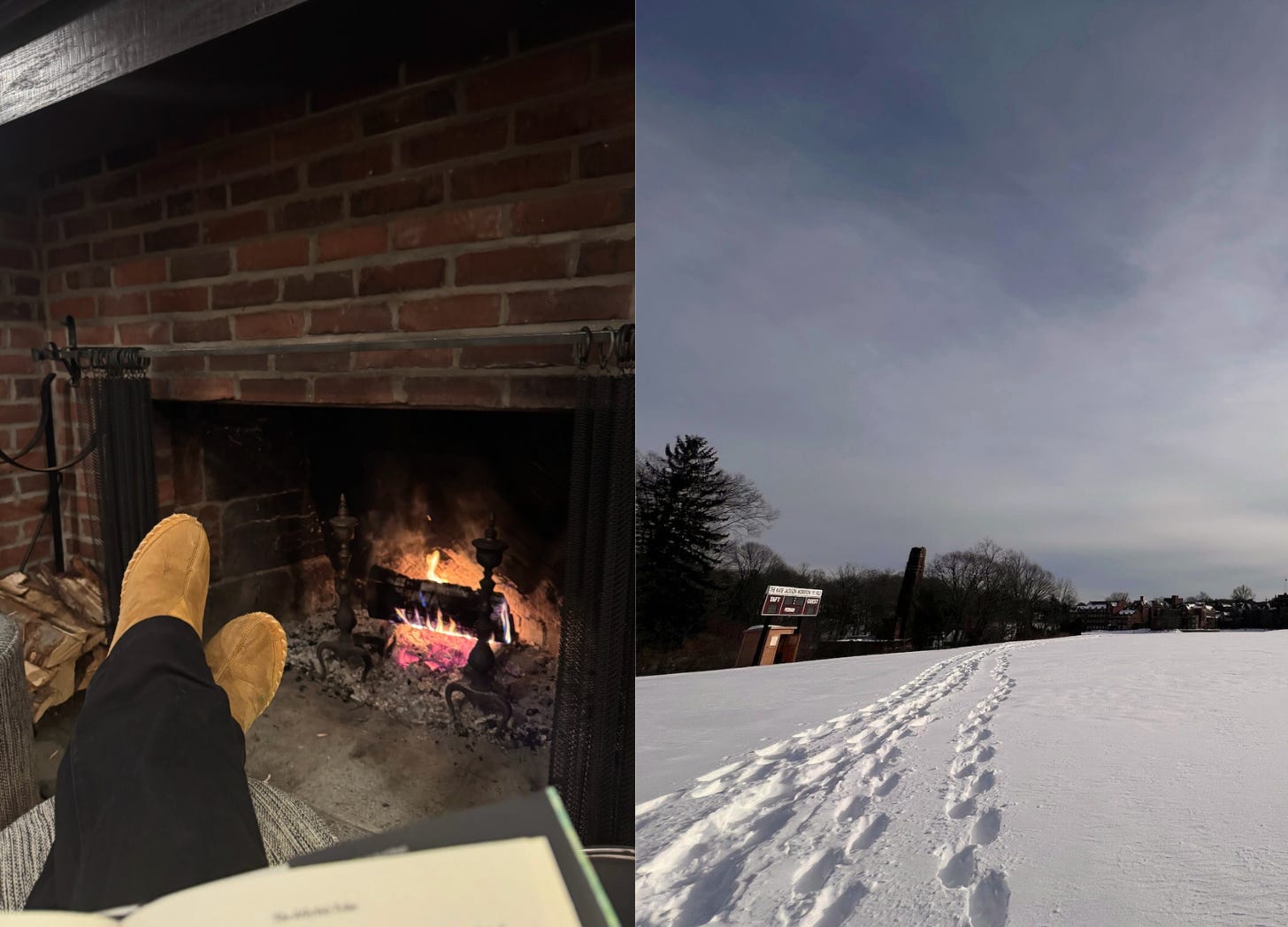
Last week, I joined in with half the nation when we received 18 inches of snow and the ensuing snow days. Even though Penny is now 20 years old, having her home unexpectedly still disrupts my rhythms. We decided to take advantage of said disruption, though, and take William and Marilee (who are about an hour away, at boarding school) out to lunch. The next morning, Marilee called home with a fever. She was home for the rest of the week, which included her 15th birthday.
All that is to say, it was an unexpected week with fun and beauty and disruption and intensity, and I suspect that the majority of the people reading this note can relate.
And, in the middle of all that, I flew to Chicago to the Covenant Church’s Midwinter Conference. I spoke from Luke 14 about Reimagining Church Life with Disability. I’ve now written or taught about that passage a dozen times, and yet every time I teach from it again, I understand new things about the portrait Jesus paints of the kingdom of God. As I said at Midwinter, “The people who don’t measure up to the world’s standards are the ones who make up the kingdom of God.”
Being at the conference itself, even for just a few hours, was a little glimpse into the unexpected, disruptive, beautiful kingdom of God here on earth. As it happened, the former youth pastor (Tamara Ravelo) of our former church, was at the conference.
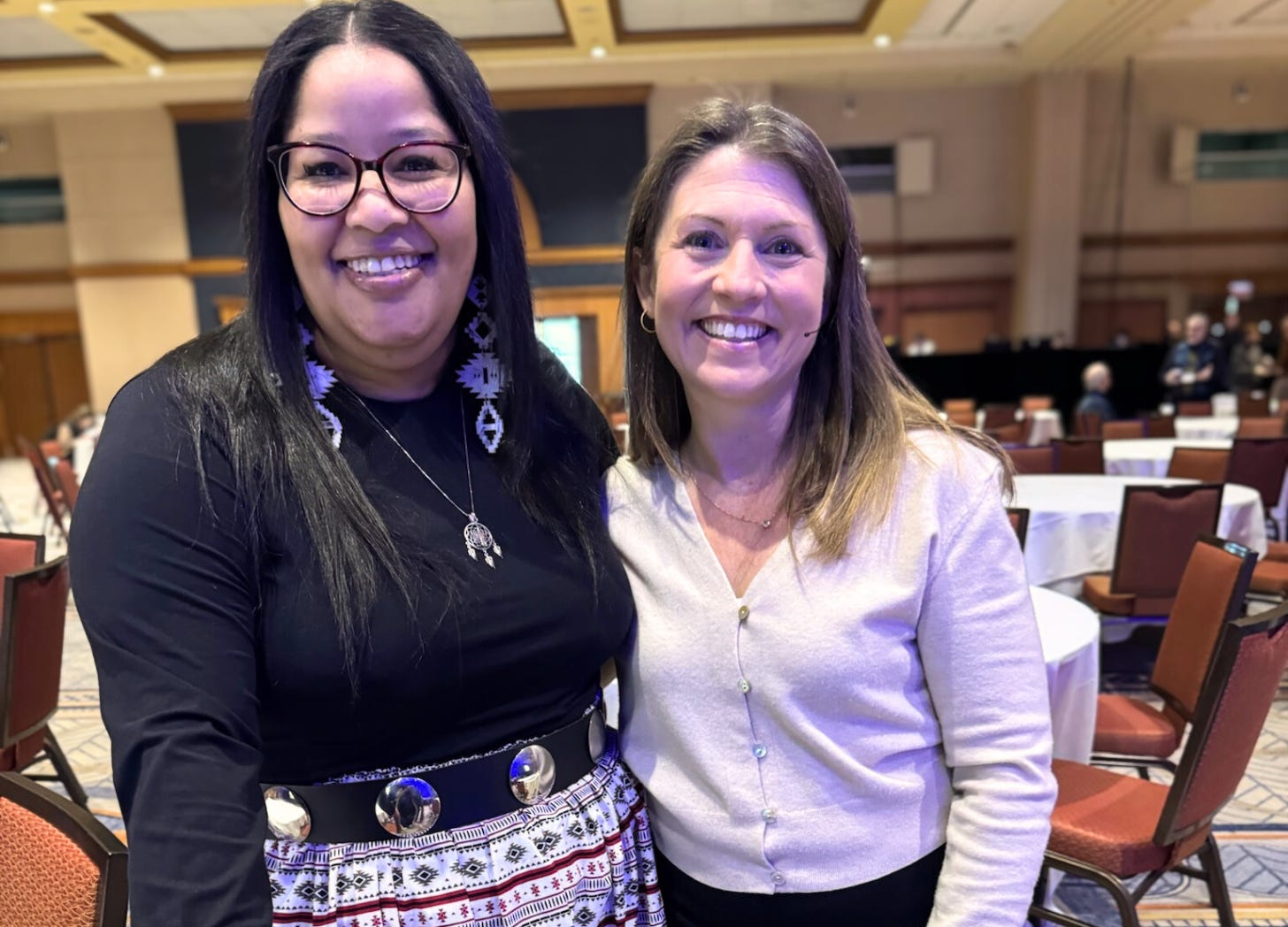
She came up to me before I started speaking. To see a supportive and familiar face was a gift in itself, but then I got to tell her that I often speak about her role in Penny’s life. Tamara came to one of Penny’s person-centered planning meetings years ago. At the time, Penny was working on making appointments and phone calls, so Tamara said, “Penny can come to youth group early and order the pizza for the group.”
It was a really simple action. It didn’t take a lot of time or effort on Tamara’s part. It took something off our plate. It helped us know we weren’t alone. And it helped both Tamara and Penny grow in their relationship with each other. But when I told Tamara that I tell that story regularly, she said, “I think of Penny all the time. She was very formational to my development as a ministry leader. Now, I have a crew of young adults with disabilities that are very integrated into the life of our church. Having those years with her made me see that those with disabilities can contribute so much.”
Tamara gave us the gift of her love and care for Penny. We didn’t know that Penny gave Tamara—and the young men and women in Tamara’s future church—a glimpse of how the kingdom of God works in return.
On the podcast this week, I got to talk with Adrian Wood about her family’s experience within the public school system with her son Amos, who has autism. As with church, lots of us experience hardship and exclusion at school, but sometimes it goes well. I’m talking with Adrian about what has worked in their family’s relationship with their local public school.
Many aspects of life—church life, work life, school life—can feel really bleak for people with disabilities (and others who are on the margins of our society).
And yet small, simple offerings can cascade into real change, real relationships, and real beauty.
That’s my hope for our family and for yours, that we would connect to each other so that there are more Tamaras building relationships with kids like Penny, and more young adults contributing what they have to offer within their communities, and more parents who can imagine and work to create a positive, collaborative, and mutually beneficial educational environment for their children.
Blessings,
Amy Julia
P.S. Keep reading for family snapshots and two things I’m pondering (with links to things worth your time).
Take the Next Step podcast:
When Special Education Works with Adrian Wood

What if inclusion in schools didn’t have to be a constant fight? Adrian Wood, PhD, shares what actually helped her son with autism thrive in their public school system. We explore:
Building trust with educators
Collaboration and creativity
Navigating IEPs and transitions
Small changes that make a big difference
“I want the best for [our son] and the best for him is a world that loves him when I’m not in it anymore… If children don’t have access to peers with disabilities, then how can they ever truly include them?”
Family Snapshots
Birthdays!
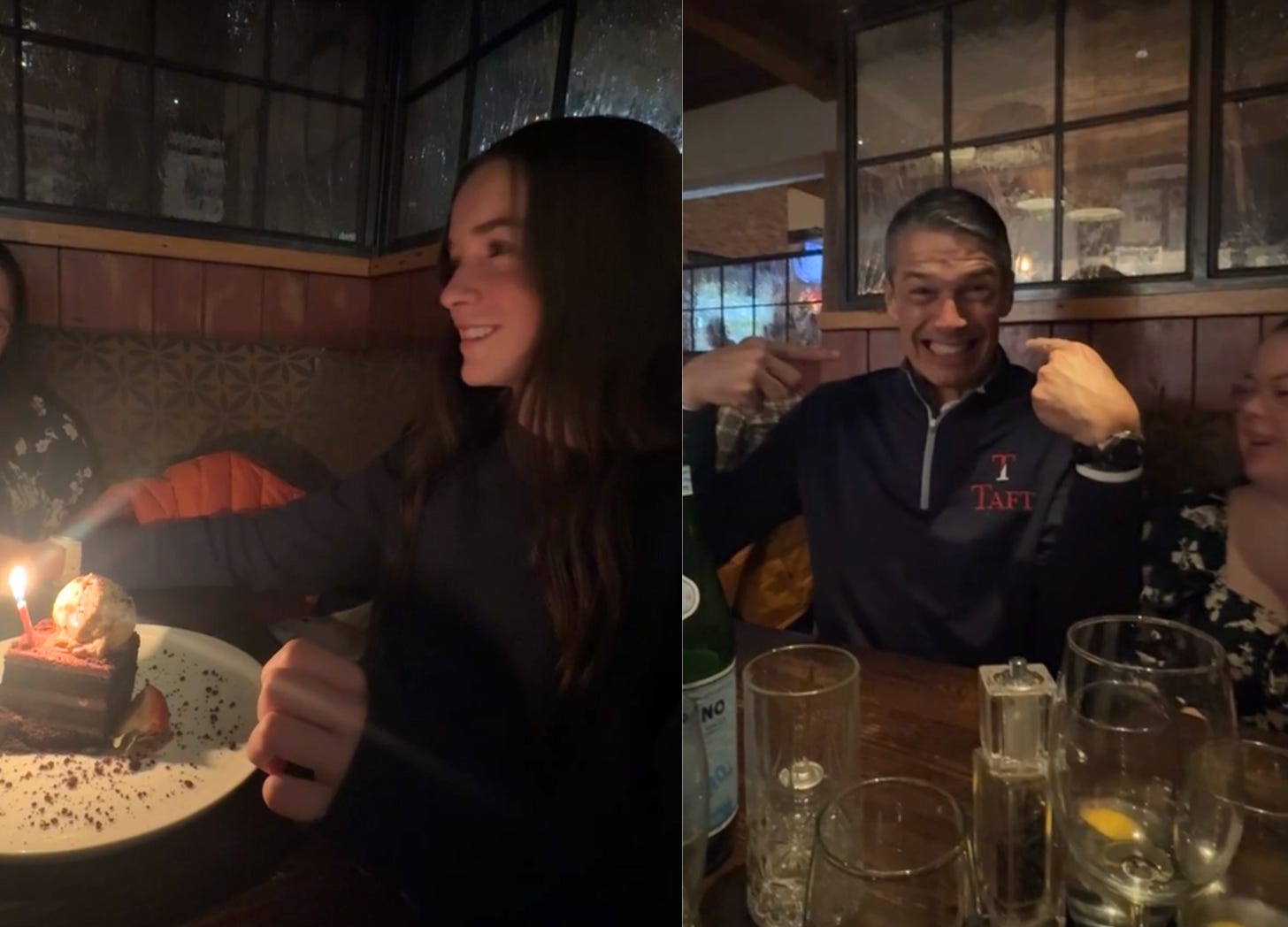
And fireplaces! And snowshoes!
Upcoming Events
Young Life • Mosaic: Growing Together | Orlando, 2.11.26
Laity Lodge: Becoming a Community of Belonging | Texas, 2.19-2.22
99 Balloons • Reimagining Family Life with Disability Retreat | Arkansas, 2.26-2.28
2 Things I’m Pondering
updated to include Bad Bunny’s Halftime Show
From Bad Bunny to Swift: Thinking About Art and Entertainment
The halftime show was both art and entertainment, and that’s the best kind of both. I am not a fan of Bad Bunny. (I’m also not not a fan. I just don’t listen to much contemporary music, so I’m unfamiliar with his work.) But even I could tell that he was entertaining a stadium of 70,000 people and millions more at home. And even I could tell that he (and his team) were doing more than entertaining in a performance that was both defiant and celebratory.
It was actually the Taylor Swift documentary that helped me realize the role that pure entertainment can play in cultivating a collective experience that lifts people up. In a world of hyper-individualization and a fair amount of brokenness and cruelty, shared delight is no small thing. Both Taylor Swift and Bad Bunny lift people up with their music. They provide an experience of joy.
But entertainment can also be art, something that pushes us into deeper questions and experiences, something that taps on the darkest and the brightest aspects of who we are as humans, something that keeps us within the present moment while also connecting us to something greater than ourselves. The number 64 on Bad Bunny’s jersey, the telephone poles, his take on “God bless America”—all push the entertainment into questions about the role of the United States in the world and the injustices experienced by other nations (and territories) in our hemisphere.
(I had a similar experience with a host of other recent films, conversations, and performances, including Deliver Me from Nowhere, the film–and book– about the season of Bruce Springsteen’s life when he was making the album Nebraska, And So It Goes, the documentary about Billy Joel, my conversation with Makoto Fujimura talk about his art, and watching Pilobolus, a modern dance company, perform.)
In a world of chaos and superficiality, where we are bombarded by advertisements and tempted by meaninglessness, art invites us to face the darkness and hope for the light all at the same time. Like a flag raised in defiance and hope, with a backdrop that declares “The Only Thing More Powerful than Hate is Love.”
So if you are someone who draws or sings or writes—or does anything else—to bring questions and to welcome truth and goodness into this world, please know how much it matters.

Disability on Screen: What The Pitt Gets Right
Okay, I have more to say about The Pitt. If you’re a fan (and I know some of you are because you told me so last week!), here’s a great profile of the lead actor and Executive Producer, Noah Wyle. And, if you’re a fan, then maybe you will also resonate with (and giggle at) this essay about shows like The Pitt, which this author dubbs “competency porn.”
But on a separate and somewhat more serious note, I’m also noticing how this show portrays people with disabilities. As with most everything else, they do a good job. First, there are the disabled patients who come into the ER. In season one, we meet a young autistic man with a sprained ankle who gets dysregulated by bright lights and lots of noise until a young doctor in training understands how to help him. In season two, a Deaf woman goes overlooked and unnoticed in the waiting room until finally receiving an interpreter. The scene that shows her communicating with a nurse also shows the nurse’s discomfort. She insists that he look at her and speak with her, and he apologizes.
But in addition to the patients who come in, we also see disability as part of the life of working doctors. The psychiatrist on call uses a wheelchair. The same doctor in training who knew how to care for the autistic young man has an autistic sister and talks about her own challenges with understanding social cues and sensory processing. The Pitt is both normalizing and neutralizing disability rather than playing into stereotypes or succumbing to a medical model of disability that, at its worst, reduces patients to their diagnoses and fails to see them in their larger personal and social context.
In other words, this show portrays real people—and real health care providers—who aren’t perfect in how they interact and who also want to serve patients well. We could use many more depictions of disability that follow their lead.
What are you pondering, reading, watching, or listening to these days? I’d love to hear from you!
🎙Listen to the podcasts.
📰 Miss a week? Read past newsletters here.
📧 Questions or feedback? Leave a comment. I read every comment and email reply from you!
As an Amazon Associate, I earn from qualifying purchases. So, if you use a link from here to purchase something I recommend, it sometimes earns me a small commission, which enables me to continue the work I do here. Thank you!
This is great, Amy! I’m always trying to imagine and dream for my son, too. What is Penny doing outside the home these days?